My car insurer offers less than I expected, or refuses to pay: what can I do?
A total loss valued below the price of a similar car, an exclusion for alcohol or a licence, an undeclared driver, a fire with third-party cover only. What applies, what the Court of Appeal recently decided, and how to make your case.
In short
First ask for the reason and the clause in writing, then make a written complaint. In a total loss, what is generally paid is the market value on the day of the accident, not a new car, and an exclusion must be clearly written.
- Ask for a copy of the assessor’s report and how the market value and the salvage value were worked out.
- Declare every driver and any change of use or address in writing; that protects your own cover.
- After an accident: photos, details, witnesses, and note when the three years run out.
- Make a written complaint within 6 months; after that, if needed, the Financial Ombudsman.
From the series “The questions you are afraid to ask”, part “When something goes wrong”: questions real people ask, with honest answers.
At a glance
- In a total loss, what is generally paid is the market value on the day of the accident, not the cost of a new car or your upgrades.
- An exclusion must be clearly written: in two 2025 decisions the Court of Appeal found for the insured because the wording was unclear.
- Declare every driver and any change of use or address in writing; that protects your own cover.
- Ask for the reason and the clause in writing; then a written complaint and, if needed, the Financial Ombudsman for a €20 fee.
An anger we understand
“I paid for years, and at the first claim they offer me half.” “They say I had been drinking, although the court acquitted me.” If you are in a dispute like this, anger is natural. We cannot tell you who is right in your case: that depends on the terms and the evidence. But we can show you what generally applies, what the courts recently decided and how to make your case properly.
Total loss: how it is valued
According to a Cyprus law firm’s general article on road accidents, in a total loss the objective market value of the car on the day of the accident is compensated, minus the value of the wreck. Sentimental value and upgrades are generally not paid. That is why an offer often falls short of what a similar car costs today. If you believe the value was set too low, the answer is evidence: adverts for comparable cars from the same period, the service book and photos of the car’s condition.
Exclusions: what the Court of Appeal decided in 2025
Two decisions, as described by a Cyprus law firm (October 2026):
- Civil Appeal 411/2019 (10 February 2025). An exclusion for drivers “who had not held a licence for two years”. The driver had held a car licence for more than two years but a truck licence for less. He was found to be covered: if the rule was meant to apply to each licence category, the policy had to say so expressly.
- Civil Appeal 10/2018 (17 December 2025). A drink-driving exclusion that required a conviction or sufficient evidence. The insured had been acquitted, and the insurer’s appeal was dismissed because the wording was ambiguous.
The principle is called contra proferentem: unclear wording is read against the party that drafted it. But it applies only when, after normal interpretation, two reasonable readings really remain; disagreeing is not enough. And the court noted that an acquittal does not always lead to cover.
An undeclared driver, wrong details
Since an amendment of December 2021, according to a Cyprus law firm, the insurer must satisfy court judgments for injured third parties even if the policy was issued after non-disclosure or false statements. The third party, in other words, is protected. Whether the insurer can then claim the money back from its own policyholder is not covered by that source, and we could not confirm it. So the safest course is to declare every driver, change of use and change of address in writing.
Premiums and the no-claims discount
House of Representatives research, as reported by Politis in September 2026, says that third-party motor premiums are not set or approved in advance by the supervisor, and that bonus-malus and no-claims systems are at each insurer’s discretion. The EU rules provide that, when you ask, the insurer gives you a statement of your claims history covering at least the last five years, within 15 days.
What the figures show elsewhere
In the United Kingdom (not Cyprus), car insurance was the most complained-about product at the Financial Ombudsman Service in 2024/25: 14,082 complaints, 42% of them decided in the consumer’s favour. In the EU, according to EIOPA, claims handling made up 52% of non-life insurance complaints in 2024. We found no comparable published figures for Cyprus.
If you disagree: the complaint route
- Ask for the reason in writing. With the exact policy clause and the evidence (reports, assessments) the decision relied on.
- A written complaint to the insurer. Within 6 months of learning of the problem. The insurer must reply within the time set in its complaints procedure; the Superintendent of Insurance’s guide says up to 45 days.
- The Financial Ombudsman. If there is no reply or it is vague. A €20 fee, in writing, in Greek or English, within 12 months of the written complaint. Claims against insurers up to €20,000 are examined by the Deputy Ombudsman; a decision up to €20,000 binds both sides.
- The courts. Always open, usually slower and more costly, with a lawyer. If you go to court, the Ombudsman’s examination stops.
The practical steps, with letter templates you can copy: How to build your case.
What went wrong for others — and how to avoid it
- A loosely worded exclusion that the insurer relied on anyway (Cyprus, Court of Appeal decisions 2025). Ask for the exact clause in writing. If it can reasonably be read two ways, say so in your complaint.
- The total loss was valued below the cost of a similar car (Cyprus). Keep the service history and photos, and collect adverts for similar cars from the same period. If you want more than market value, ask about new-for-old or agreed-value cover before you buy.
- A driver or a use that was not declared (Cyprus). Declare in writing every driver, any change of use (for example for work) and of address, and keep the confirmation.
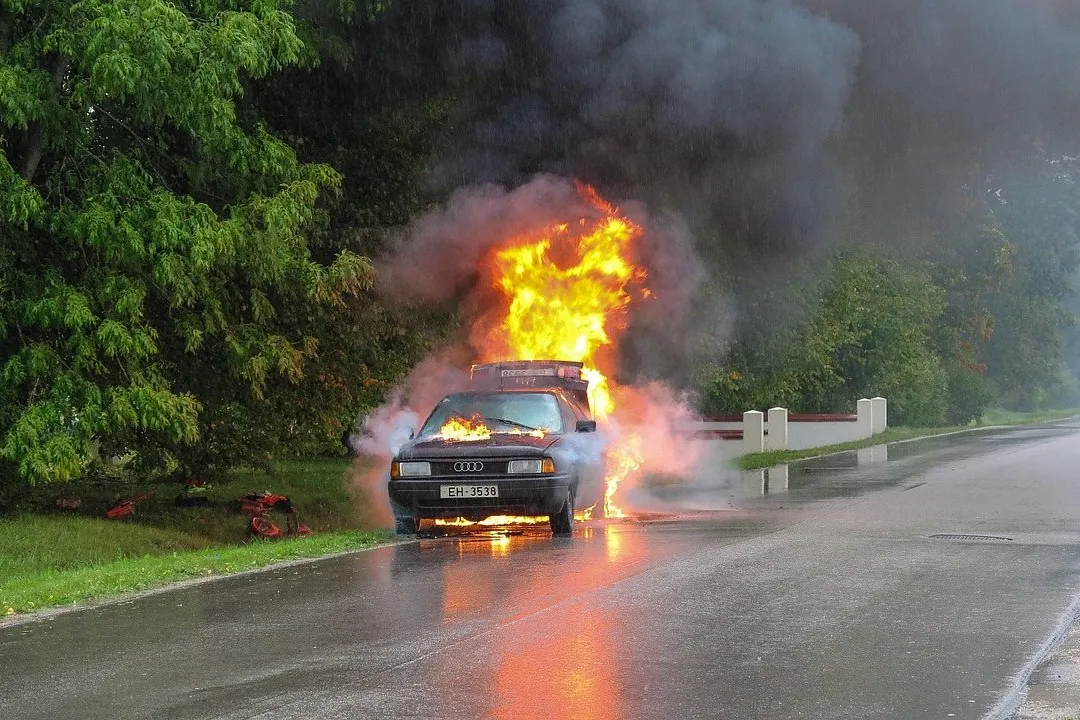
- The car burned, but it had third-party cover only (Cyprus, Limassol wildfire 2025). Third-party cover does not pay for fire damage to your own car. If losing it would hurt you financially, consider at least third party, fire and theft.
Your questions, one by one
The insurer says my car is a total loss and offers far less than it would cost me to buy the same car again. Is that legal?
Usually yes, if the offer is based on market value. In a total loss, what is generally paid is the objective market value on the day of the accident, not the cost of buying the same car at today’s prices. If you believe the value was set too low, challenge it with adverts for similar cars and your car’s history. Check too whether your policy has a new-for-old or agreed-value clause.
How do they calculate the market value of my car after a total loss, and can I challenge their valuation?
The insurer usually relies on an assessor’s report that looks at model, year, mileage, condition and market prices. Ask for a copy of the report in writing. To challenge it, send adverts for comparable cars from the same period, the service book and photos; you can also get your own valuation. If you still disagree, the next step is a written complaint.
I had just fitted new tyres and a new sound system. Why won’t the insurer pay for the upgrades in the total-loss settlement?
According to the practice a Cyprus law firm describes, upgrades and sentimental value are generally not paid, because what is compensated is the car’s market value. New tyres or recent servicing can still show that the car was in better-than-average condition. If you add expensive equipment, ask your insurer whether it needs to be declared separately.
If the car is written off, who keeps the wreck and how is its salvage value deducted?
It depends on which insurer is paying. In a claim against the at-fault driver, according to the same law-firm article, the market value minus the value of the wreck is paid, and you keep the wreck. Under your own policy the terms decide: some insurers take the wreck and pay the full value. Ask in writing how the salvage value was calculated.
Both insurers blame each other’s client and nobody pays. Who decides who was at fault?
If the two insurers cannot agree, fault is ultimately decided by a court. The police report, photos, witnesses and cameras help a great deal. Fault can also be shared, in which case compensation is reduced in proportion. Watch the deadline: the right to sue over a road accident expires three years after the accident, and negotiating does not stop the clock.
They refused my claim saying I had been drinking, even though the court acquitted me. Can they do that?
It depends on how the exclusion is worded. In December 2025 the Court of Appeal dismissed an insurer’s appeal in such a case: the exclusion required a conviction or sufficient evidence, the insured had been acquitted, and the wording was found ambiguous. The court also noted that an acquittal does not always lead to cover. Ask for the exact clause and, if it can reasonably be read two ways, say so in your complaint.
The policy excludes drivers with a licence ‘less than two years’. I’ve driven for ten years but got my truck licence last year. Am I covered?
In an almost identical case in February 2025, the Court of Appeal found the driver was covered: he had held a car licence for more than two years, and if the rule was meant to apply to each licence category, the policy had to say so expressly. The court also looked at the clause heading and the certificate of insurance. Your case is judged on your own wording, so ask for it in writing.
My son drove my car and crashed. The insurer says he wasn’t a named driver and refuses everything. What happens now?
The position of the injured third party and your own position are two different questions. We could not confirm how the law treats a driver who was not on the policy as regards the third party. For damage to your own car and your relationship with the insurer, what decides is what your policy says about who may drive. Ask for the clause in writing and, if the insurer asks you for money, speak to a lawyer.
If the insurer pays the other driver but says I gave wrong information on my proposal, can they come after me for the money?
Since December 2021, according to a Cyprus law firm, the insurer must satisfy court judgments for third parties even if the policy was issued after non-disclosure or false statements. Whether it can then claim the money back from you is not covered by that source, and we could not confirm it. If you receive such a demand, do not agree to anything before speaking to a lawyer.
I forgot to tell the insurer I’d moved house and now use the car for work. Could that void my motor policy?
It can cause a problem, because address and use affect the risk the insurer accepted. Exactly what happens depends on the terms and on how significant the change was. Tell the insurer in writing now, before any claim, and keep the confirmation. The premium may change, but you protect your cover.
The insurer wants me to use their garage, but I trust my own mechanic. Who decides where the car is repaired?
Under your own policy, the terms decide the garage: some policies use partner garages, others let you choose with the quote approved first. Ask in writing what yours says. In a claim against the at-fault driver, what generally matters is the reasonable cost of repair, so a well-documented quote from your own garage carries weight.
They want to use second-hand or non-original parts on my nearly new car. Do I have to accept that?
Whether used or non-original parts are allowed is set by your policy terms, and it is worth checking now. If the car is under a manufacturer’s warranty, ask whether non-original parts affect it and send the answer to the insurer. Ask in writing which parts will be used before the repair starts.
My car burned in the fire. I only have third-party cover. Is there any way to get compensated?
Third-party cover does not pay for fire damage to your own car; this was pointed out after the 2025 Limassol wildfire. Check whether the state set up a scheme for that disaster, which has its own terms and deadlines. For the future, if losing the car would hurt you financially, consider at least third party, fire and theft.
What exactly does ‘third party, fire and theft’ cover compared with full comprehensive?
Third-party cover pays for the damage you cause to others. Third party, fire and theft generally adds fire and theft of your own car. Comprehensive cover also adds accident damage to your own car, often with an excess. Limits, exclusions and natural events differ from policy to policy, so check them in writing.
They refused my theft claim because I left the key in the car for a minute. Is that a fair reason?
Some policies have conditions about keys left in the car or an unlocked vehicle, and the insurer may rely on them. What matters is the exact wording: what it says about time, distance or how the car must be secured. Ask for the clause in writing; if it is unclear for your situation, the ambiguity can be read against the insurer, as the Court of Appeal found for other exclusions.
I made one small claim and my no-claims discount disappeared. Who sets these rules?
No-claims discount and bonus-malus systems are at each insurer’s discretion, according to House research reported by Politis in 2026; there is no single rule for all. Ask in writing for the rules of your insurer’s system before your next claim. For small damage, some people work out whether paying it themselves costs less than losing the discount.
Can I get a certificate of my claims history to take my no-claims discount to another insurer?
The EU motor insurance rules provide that the insurer issues, on request, a statement of your claims history covering at least the last five years, within 15 days. We did not confirm the Cyprus provisions that apply it. Ask for it in writing; whether a new insurer recognises the discount is for that insurer to decide.
What should I collect at the scene of an accident so the claim doesn’t turn into a dispute later?
First safety, and 112 if anyone is hurt. Then: the other driver’s details and insurance, the registration number, photos from several angles (positions of the cars, damage, the road, signs), witnesses’ contacts, and the police report number if there is one. Do not admit fault at the scene. Notify your insurer as soon as possible, in writing.
My windscreen claim was refused because of an exclusion I never noticed in the small print. Is a hidden exclusion valid?
An exclusion applies if it is part of the terms you were given, even if you did not notice it. But it must be written clearly: when wording can reasonably be read two ways, courts read it against the insurer. Ask in writing for the clause and when the terms were given to you; if you received them after signing, mention it in your complaint.
I heard ombudsmen often side with drivers in car-insurance disputes. Is it worth complaining?
A written complaint costs nothing, and the Financial Ombudsman costs €20; its decisions up to €20,000 now bind both sides. In the United Kingdom (not Cyprus), 42% of car insurance complaints in 2024/25 were decided in the consumer’s favour. We found no comparable rate for Cyprus, and nobody can promise you an outcome; with documents and a clear request, though, it is worth trying.
Questions worth asking in writing
- Exactly which clause of the policy is your decision based on?
- Can I have a copy of the assessor’s report?
- How were the market value and the salvage value calculated?
- What are the rules of your no-claims discount system?
What you can do from today
- Read the exclusions and who is allowed to drive, not only the cover.
- Declare every driver, change of use and change of address in writing.
- Save the claims phone number and the policy number in your phone.
- After an accident: photos, details, witnesses; note the date the three years run out.
- If you disagree, ask for the reason and the clause in writing, and make a written complaint within 6 months.
General information, not advice (legal or insurance). Every policy has its own terms; for your own case, the law and what your policy says apply. For general insurance (car, home, travel, liability) speak to a general-business intermediary or your insurer, and for a legal dispute to a lawyer. AVRASTRO is not an insurer.
Sources
- KP Legal — Road accident in Cyprus: know your rights (in Greek; a law firm’s general article)
- Harris Kyriakides LLC, 8 October 2026 — Insurance coverage exclusions: recent Court of Appeal decisions
- Harris Kyriakides LLC, 23 May 2022 — Non-disclosure and false statements in motor insurance
- Politis, 12 September 2026 — House research on motor insurance premiums (in Greek)
- Directive 2009/103/EC on motor insurance, recitals (Greek text, Taxheaven)
- Cyprus Mail, 3 October 2025 — Property owners objecting to meagre wildfire compensation
- UK Financial Ombudsman Service — Annual complaints data 2024/25 (United Kingdom, not Cyprus)
- EIOPA — Consumer Trends Report 2025, heatmap (EIOPA-BoS-25-621; EU data)
- Insurance Companies Control Service (ICCS), Ministry of Finance — Complaints
- Financial Ombudsman of the Republic of Cyprus — FAQs
- Financial Ombudsman — Complaints service: information for natural persons
- Financial Ombudsman, Board Directive 177/2025 (Ombudsman and Deputy Ombudsman), CyLaw
- Law 87(I)/2026 (Official Gazette 21 April 2026), CyLaw
Read also: What to do after a road accident · When the other side is at fault: claiming from their insurer · How to build your case, with letter templates · General insurance guide · My claim was refused: is there any point in complaining? · All the questions you are afraid to ask